

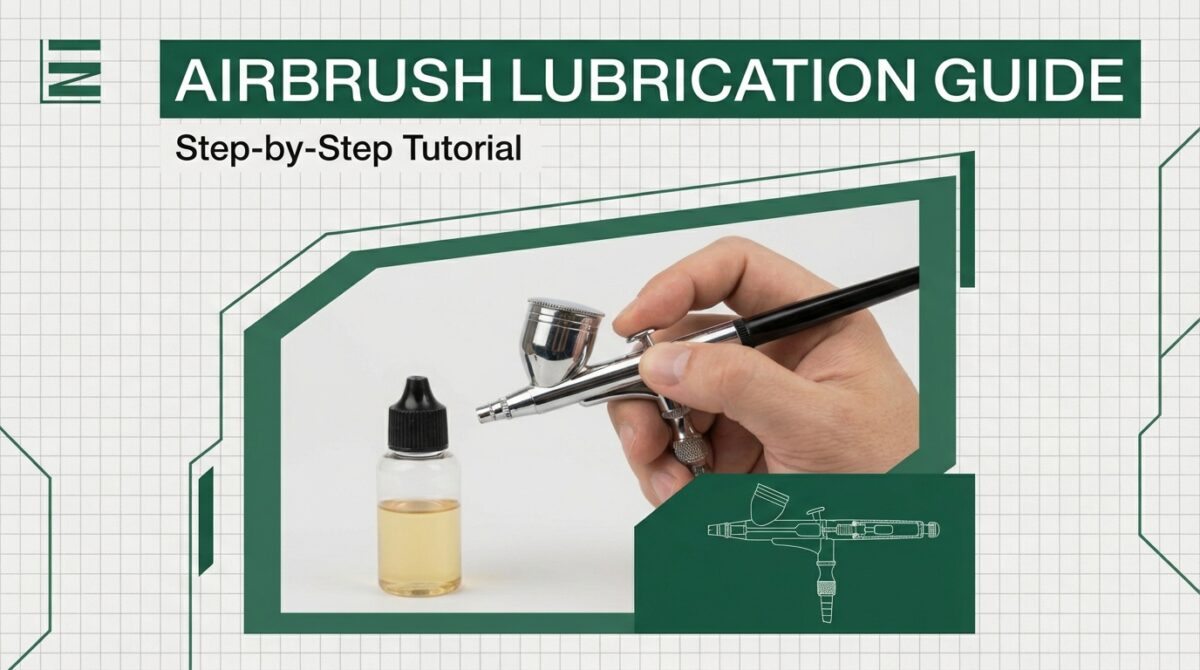
Proper lubrication of your airbrush improves smoothness, reduces component wear, and extends its lifespan. Airbrushes do not need frequent oiling, but it must be applied in the correct location using the correct lubricant.
1. When to Lubricate
Lubrication is recommended in the following cases:
- After cleaning, if the trigger operation feels stiff
- When pulling the needle feels resistant
- After long periods of non-use
- As part of regular maintenance (after several cleanings)
2. Tools Needed
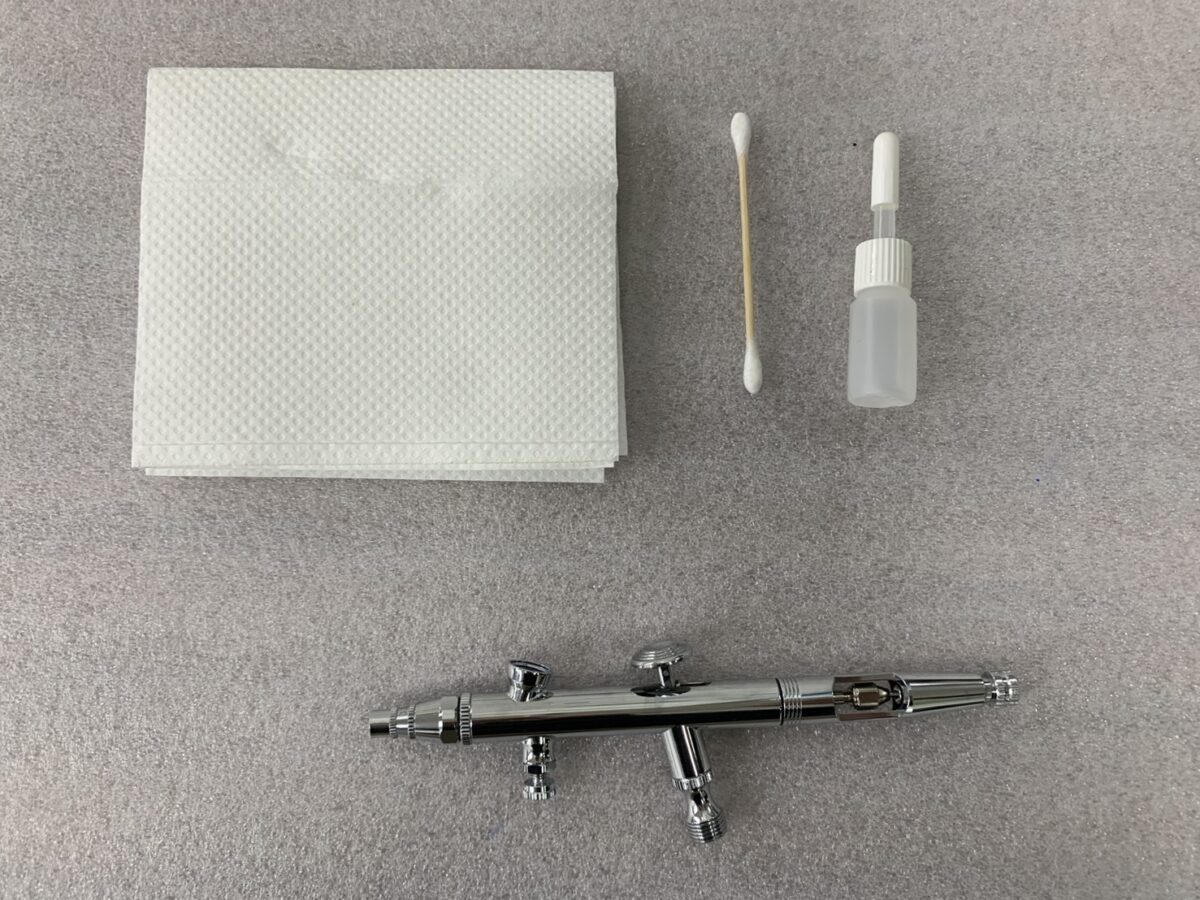
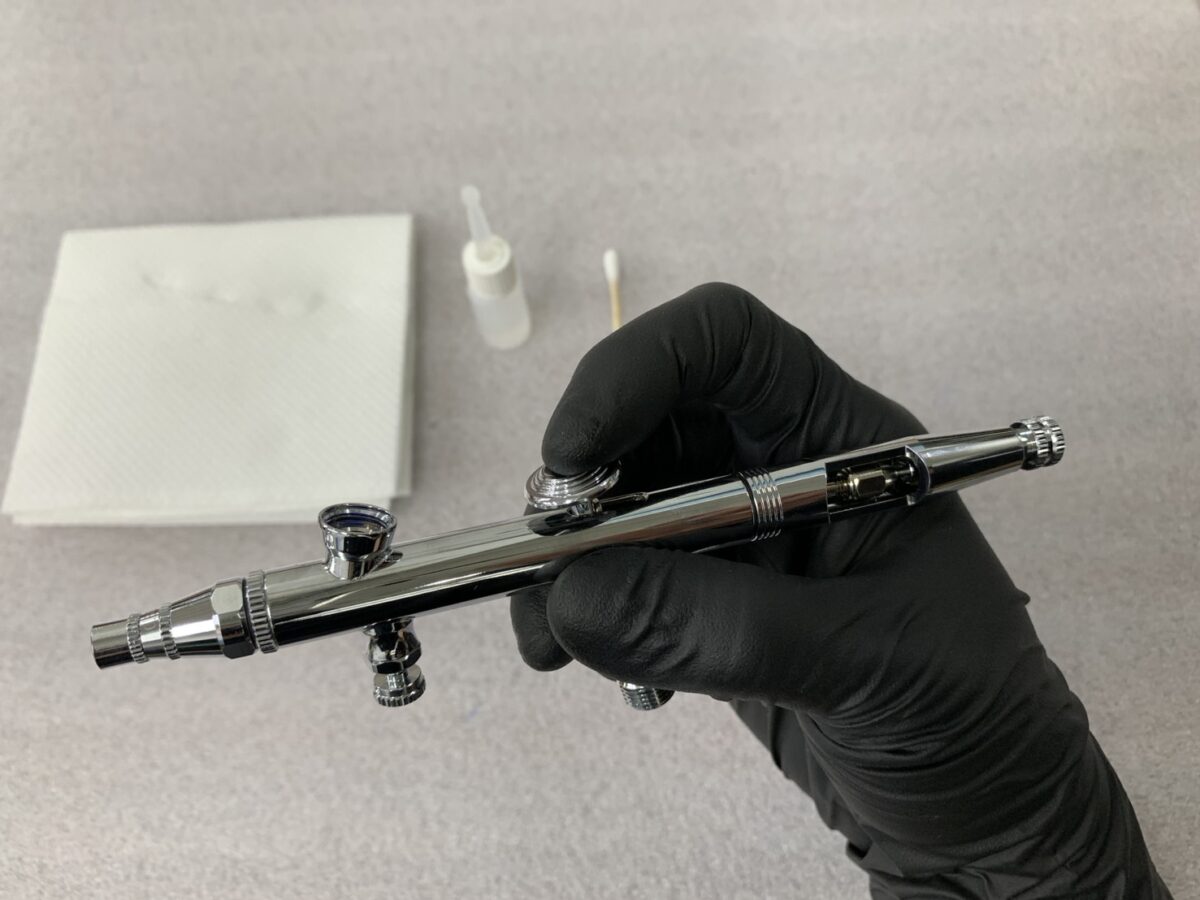
- Airbrush-specific lubricant
- Cotton swab or thin stick tool
- Paper towel
- Cleaned and fully dried airbrush
3. Precautions
- Always clean and fully dry the airbrush before lubrication
- Use only a small amount of lubricant to avoid excess
- Do not lubricate the nozzle or needle tip; lubricant in the paint passage will cause problems
- Do not use non-airbrush oils
4. Lubrication Steps
Step 1: Remove the Needle
- Loosen the rear-end fixing part
- Carefully pull the needle out from the back
- Make sure the needle is clean and free of paint residue
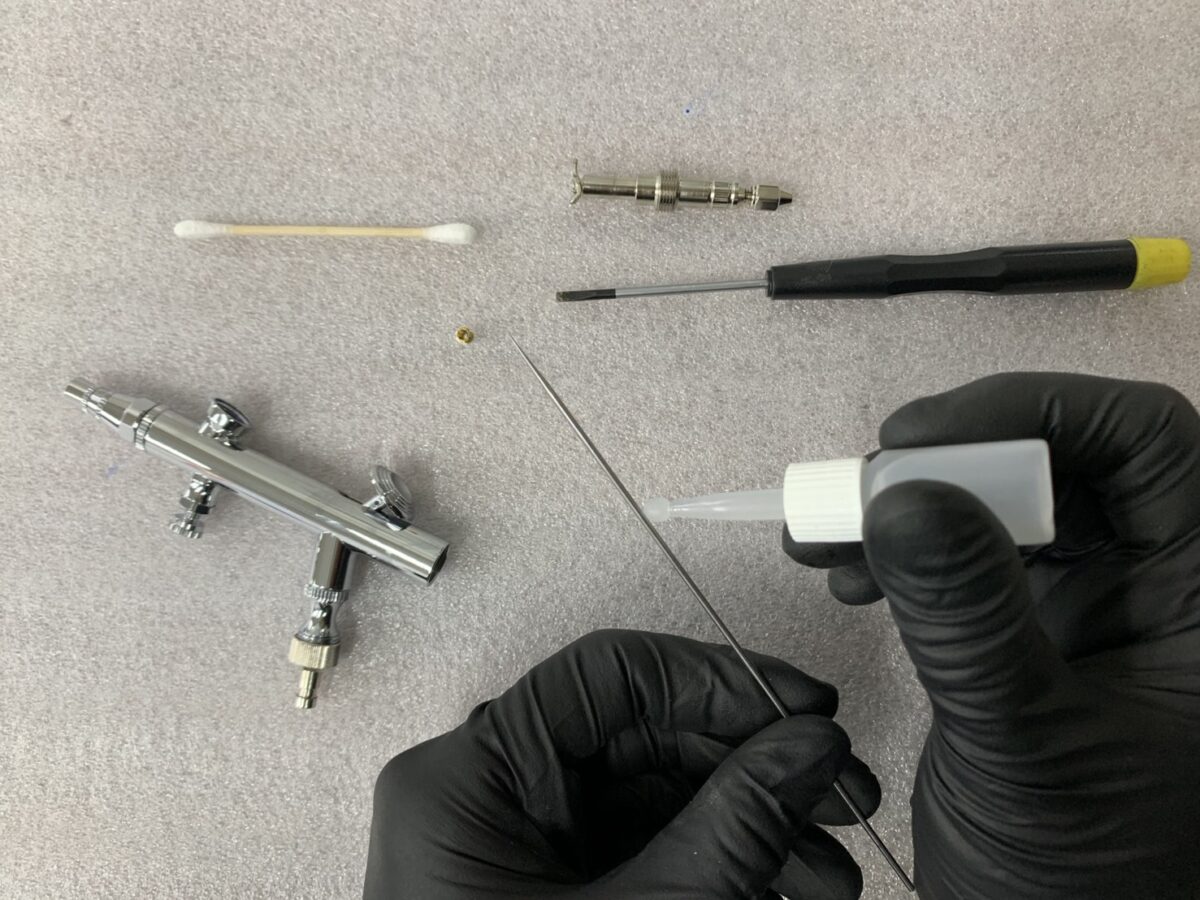
Step 2: Lubricate the Needle
- Apply a tiny amount of lubricant to a cotton swab or thin tool
- Lightly coat the middle and rear sections of the needle
- Avoid the tip and front spray area
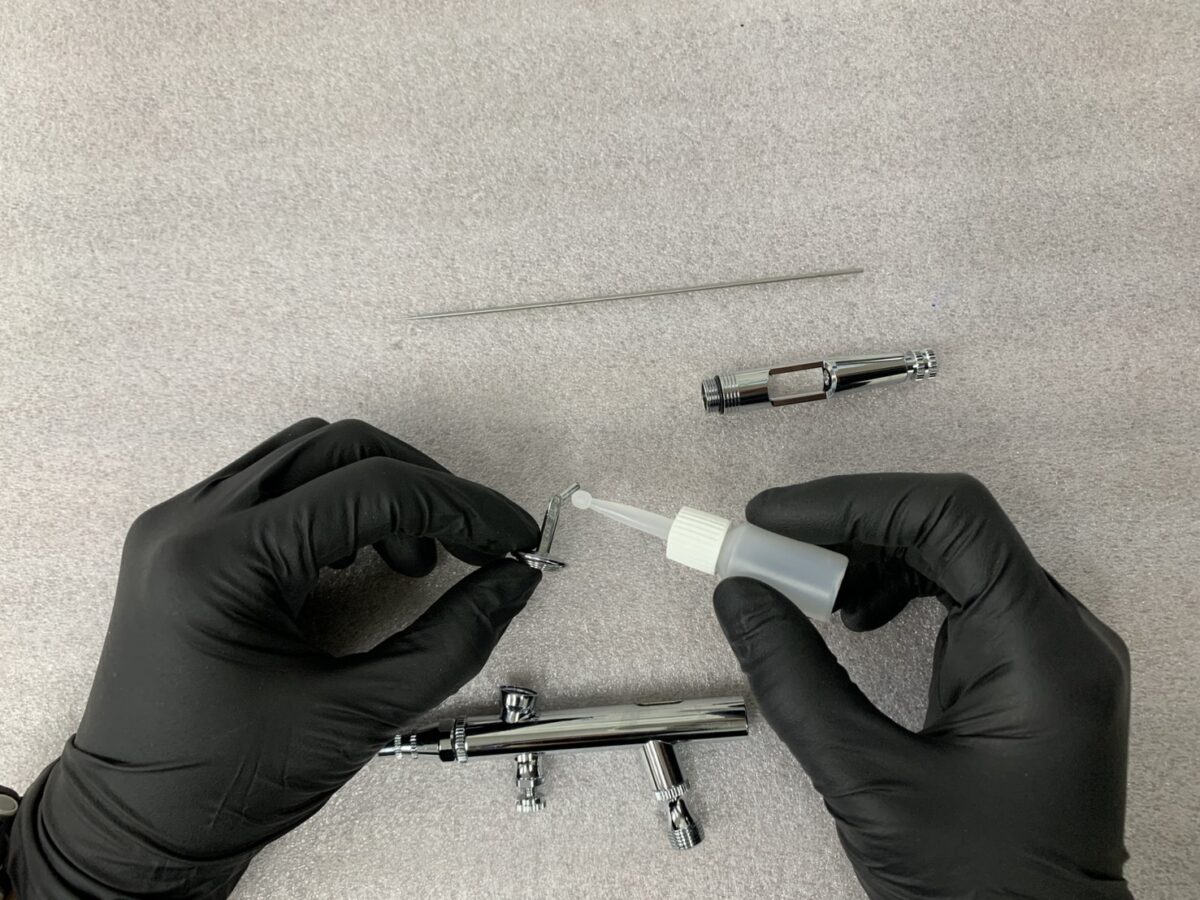
Step 3: Lubricate the Trigger (if needed)
- Lightly apply lubricant to contact points between the trigger and other parts
- Avoid disassembling too many parts; ensure paint passages are not affected
Step 4: Reassemble and Test
- Slowly insert the needle back into place
- Tighten the rear-end part
- Test the trigger for smooth movement and proper rebound
- Wipe off any excess oil with a paper towel
5. Common Mistakes
- Lubricating the nozzle or needle tip
- Using engine oil, petroleum jelly, or other non-specialized oils
- Excess lubrication causing oil to enter paint passages
- Lubricating without cleaning
6. Maintenance Advice
- Cleaning is the main maintenance; lubrication is secondary
- Use just enough lubricant; over-oiling can affect paint stability
- Check trigger feel regularly and lubricate only if needed